
Do Boise Winters Really Require Dedicated Winter Tires?
Boise sits in a part of Idaho where winter weather swings hard; one week brings clear roads, and the next brings snow, slush, and black ice before sunrise. All-season tires are engineered to perform reasonably well across a wide temperature range, but that versatility comes at a cost in the coldest months. Once the air turns cold, the rubber in an all-season tire firms up and can't flex as well into the microscopic grooves of a snowy or icy road.
Dedicated winter tires are molded from a rubber compound that stays pliable in the cold, so the tread can actually bite into snow and ice rather than skating across the surface. For regular commuters in Boise, Meridian, Nampa, Caldwell, or Eagle, that difference shows up most in stopping distance and overall control on a frosty morning.
What Makes Winter Tires Different From All-Season Tires?
The tread pattern on a winter tire is cut deeper and packed with hundreds of small slits called sipes. Those sipes open as the tire rolls, creating extra biting edges that grab loose snow and channel away slush and water. All-season tires use a shallower, more generalized tread meant to balance wet, dry, and mild winter conditions, so they don't specialize in any one of them.
The rubber compound matters just as much as the tread pattern. Winter tire rubber is formulated to resist hardening in freezing temperatures, while all-season rubber is built around a warmer average range. That is why a vehicle on all-season tires can feel noticeably looser and slower to respond on a cold morning than the same vehicle on dedicated winter rubber.
When Should Boise Drivers Switch to Winter Tires?
The safest approach is mounting winter tires before the first real snow or hard freeze hits, not after. Waiting until roads are already icy means driving on compromised rubber during the exact conditions winter tires are meant to handle. Many Boise area drivers aim to make the switch in the fall, well ahead of the first snowfall, and swap back to all-season tires once nighttime temperatures reliably stay above freezing in spring.
Booking a visit early is simple; drivers can schedule a service appointment before the first snow instead of waiting for icy roads to force the issue. That same visit is also a good time to have brakes, battery health, and fluid levels checked before winter settles in.
How Can You Tell When Winter Tires Need to Be Replaced?
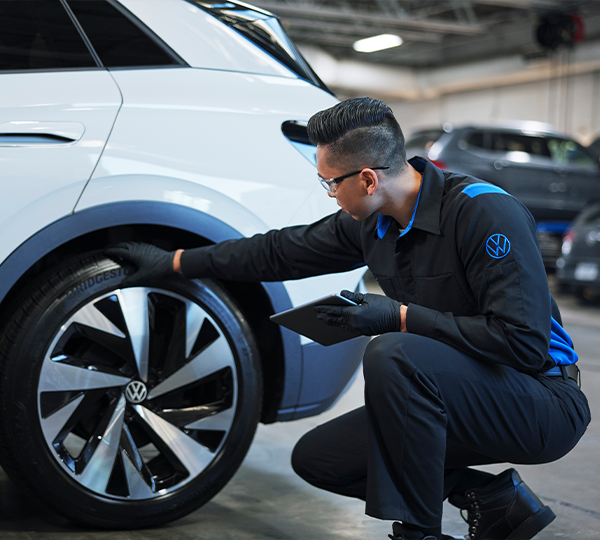
Winter tires lose their advantage long before they look obviously bald. As the tread wears down, the sipes shrink, and the tire loses the extra biting edges that make it effective in snow, even if some rubber remains. A simple visual check for uneven wear, cracking, or flattened tread blocks can reveal a tire that has aged out of winter service.
Vibration, a longer stopping distance, or a vehicle that feels like it is wandering on snow are also worth paying attention to. The service department at Boise Volkswagen can measure remaining tread and let a driver know whether a tire has another winter left or it is time to shop for a replacement set.
Does All-Wheel Drive Replace the Need for Winter Tires in Idaho?
All-wheel-drive systems, like those available on the Volkswagen Atlas and Tiguan, help put power down more evenly when accelerating from a stop on snow or ice. That is a real advantage, but it only addresses acceleration. All-wheel drive does nothing to shorten stopping distance or improve cornering grip, and those are the moments when winter weather actually causes crashes.
A vehicle with all-wheel drive riding on all-season tires can still slide through a stop sign or lose control in a turn on packed snow. Pairing winter tires with an all-wheel-drive SUV such as the Atlas gives a driver better traction in every direction, not just when pulling away from a stoplight.
Where Can Boise Drivers Get Winter Tires Installed and Maintained?
Finding the correct winter tire size and having it mounted correctly matters as much as choosing the right tire in the first place. The parts and service teams can help match a tire to a specific Volkswagen model and confirm it is balanced and installed correctly. Drivers who already know what they need can order the right parts directly, while those who want a professional opinion can bring the vehicle in for an inspection.
Either way, getting tires checked before winter settles in across Boise, Meridian, Nampa, Caldwell and Eagle is far easier than dealing with a flat or a slide once snow is already on the ground.
What tread depth is considered too worn for safe winter driving?
A worn winter tire shows tread that has flattened close to the built-in wear bars molded between the tread blocks. Once those bars sit flush with the surrounding tread, the tire no longer has enough depth to channel snow and slush and should be replaced regardless of how new it looks otherwise.
How do you know if a tire is actually rated for winter use?
A true winter tire carries a mountain and snowflake symbol molded into the sidewall, marking it as certified for severe snow service. An all-season tire typically only carries a mud and snow designation, which signals light-duty traction rather than dedicated cold-weather performance.
Which Volkswagen models offer all-wheel drive for winter driving?
The Volkswagen Atlas, Atlas Cross Sport, and Tiguan are available with all-wheel-drive configurations built for added traction when pulling away on snow or wet pavement. Pairing any of these with winter tires gives a more complete traction package than all-wheel drive alone.
When should winter tires be removed in the spring?
Winter tires should come off once nighttime and morning temperatures reliably stay above freezing and snow has stopped falling in the area. Running winter tires through a warm season wears the softer rubber down faster and shortens how many winters the set will last.
Why do all-season tires struggle once Idaho temperatures drop?
All-season tires use a rubber compound balanced for a wide range of conditions rather than cold weather specifically. As temperatures fall, that rubber stiffens, and the tread cannot flex into the small grooves of an icy or snowy surface, reducing grip when it matters most.
Where should winter tires be stored during the off season?
Winter tires last longer when stored in a cool, dry space away from direct sunlight and away from anything that emits ozone, such as a furnace or generator. Stacking them flat or hanging them upright keeps the tread from developing flat spots while they sit unused.
How often should tire pressure be checked during winter?
Tire pressure should be checked regularly through the winter since cold air causes pressure to drop noticeably between fill-ups. Underinflated tires wear unevenly and respond more slowly, so a quick pressure check on a cold morning helps maintain consistent handling and traction.
What is the difference between studded and studless winter tires?
Studded winter tires use small metal studs embedded in the tread to bite directly into solid ice, while studless winter tires rely entirely on tread design and a cold-weather rubber compound. Studless tires are quieter on dry pavement and are legal in more places year-round.
How can a driver tell if the issue is tires or an alignment problem?
Tires that wear evenly across the tread but still feel loose on snow usually point to a tire traction issue rather than alignment. Wear that is heavier on one edge of the tire, or a vehicle that pulls to one side on dry pavement, points more toward an alignment problem instead.
Why is tire rotation important for winter tire longevity?
Front and rear tires wear at different rates depending on how power and braking are distributed, especially on all-wheel-drive vehicles. Rotating winter tires on a regular schedule evens out that wear, helping the full set lose tread at a similar pace and last through more winters.
Drivers in Boise, Meridian, Nampa, Caldwell, and Eagle who want a second opinion on tread, tire type, or timing can bring a vehicle to Boise Volkswagen before the first hard freeze hits. Anyone ready to get ahead of winter can visit the service department now rather than waiting for the first snowy commute.